Friday, September 29, 2006

Found Poems by Salon Members


Please note: selections have been published in order of their submission. If you'd like to publish your found poem on the blog, please submit it via the Writers Salon yahoo group.


AN ANCIENT IMMOVABLE ARM

An ancient immovable arm,
Invisible, balanced.
An ancient immovable arm,
With prolong sound, merged people with pain, grief,
Energy, fierce pride and pleasure.

The words were borrowed from Webster, page 797 (Ms).

Kalman Kivkovich

A CONSTELLATION OF GROWTH

A constellation of days designated
for planting trees,
for flowing water, not restrained or limited,
style flavored with caraway seeds,
people growing, trembling or quivering with excitement.

Words taken from Webster's Dictionary Page 63 (A's)

Sandi Kivkovich


POPEYE'S "SMOKING GUN"

This new food fear
becomes inconvenient again.
71 percent were women,
after discovering
an opened bag of spinach.
Nine California farms
zero in on three
health authorities.
The "smoking gun"
has died.
Watch how the leafy green,
the tainted greens,
could be a crucial clue.

from the CNN article "Health chiefs find 'smoking gun' spinach" dated 9/21/06
Jason Gallagher

Find Found Poetry


Exercise Your InkTank
Writing without Composing

If you’ve never heard of found poetry, you’re about to because:
1. It’s everywhere
2. Everybody’s doing it, whether they intent to or not (see Donald Rumsfeld)
3. It’s a good way to see language as language
4. Its critique of the way we use language is implicit (built-in)
5. Its critique of the culture in which the original text was created is implicit
6. You’ve decided to attend the Salon and there’s no escaping it now

The rules are very simple: using ordinary texts from the world around you, create a poem. Do not write. Compose. You may subtract lines of text and re-arrange them, but you may not add any words or phrases of your own. Your poem need not follow any formal structure (although it can, if you like) but pay close attention to what line breaks can do to the meaning and rhythm of your lines. A line as simple as the one I am writing now, can begin to look like a poem quite easily:

A line as simple
As the one I am
Writing now can
Begin to look like a poem
Quite easily.

Below you’ll find a few examples of famous (notorious) found poems. A simple Google search will provide you with a few thousand or million more. We’ll draw our original texts from a hat. Should no hats prove present or available to us, original texts will be drawn in some other equally exciting and totally random fashion. Feel free to write on your original text (maybe crossing out or highlighting words or phrases) and then transfer your found poem to the back of this sheet. Try to compose (not write) at least five lines. We’ll share them and then the best (to be determined by wild hooting and hollering) will be published on the blog.

THE UNKNOWN
As we know,
There are known knowns.
There are things we know we know.
We also know
There are known unknowns.
That is to say
We know there are some things
We do not know.
But there are also unknown unknowns,
The ones we don't know
We don't know.

Donald Rumsfeld, Feb. 12, 2002,
Department of Defense news briefing


A CHALLENGE TO YOUR SPIRIT
Girls and boys of America
Are the hope of the world!
You can’t evade it, young America.
And are you going to go on dancing
And spinning on your ear?
What are you thinking about, sitting
There staring into the dark?
Haven’t you been lying around long
Enough?
Shouldn’t you go to work?
Find as interesting a subject as possible.
Write as vivid a sketch as you can
Of a person who attracts you or an animal.

Annie Dillard from “Junior High English” from Mornings Like This: Found Poems

Sunday, September 17, 2006

Take-Out Sestina


The Take-Out Assignment for the week is to write a sestina with these six (Salon-generated) end-words: metrosexual, obtuse, crystal, equivocate, time bomb, terrorist. Take a look at the craftshop post for the formal structure the sestina follows. Consider shifting the words for variety and telling a story with a cohesive narrative. We'll take a look at these on Thursday -- we've already seen a few remarkable entries.

Orange saccharine Narcotics Orgasm Frosty Cascade


A Partial Sestina by the Salon Collective on the Spot

Her eyes caught my gaze like fresh narcotics
An unattented hookah burned shisha so saccharine
Silvery water that roared nature's orgasm
Evaporating condensing perspiration turned frosty
Removing all memory of a world with colors rippling red ostentatious orange.

Better than narcotics are oranges
What the hell am I doing with these narcotics
They only make the rings in my nost frosty
It lingers on the lips of my love like an orgasm
Goose bumps down my back cascade

Down Main Street we cascade
To a room painted bright orange
Many colors in your mind like a mental orgasm
Stawberry fields forever these are great narcotics
Ripped out mouth smiles saccharine
Frosty

Formal Attire


Exercise Your InkTank

Today we’re going to try on some formal constraints. That’s right. We’re getting conventional up in here. Maybe you’ve written some formal poetry before, a few pantoums or a villanelle, perhaps. Maybe you’ve written poems before but nothing formal because formal poetry is stale and frusty and/or absolutely terrifying. Or maybe you’ve never written a poem before at all. No matter your disposition or level of experience, the truth (and it’s not one I’m making up this time) is that formal constraints are a good way to free yourself from habit and to invite real invention into your writing space. You may find a new turn of phrase or a new image, a new story or a new voice, or you may simply find that a new form reminds you of what you valued in more familiar forms. At a minimun, you’ll leave today having written a sestina with your fellow Salonists.

The Suit
A sestina. Let’s talk about what that is first: It’s a poem consisting of six six-line stanzas and one three-line envoy. The end-words (we’ll generate these together) in each stanza are the same, but they follow different sequences. Here’s the pattern the sestina follows:

1 2 3 4 5 6 - End words of lines in first sestet.
6 1 5 2 4 3 - End words of lines in second sestet.
3 6 4 1 2 5 - End words of lines in third sestet.
5 3 2 6 1 4 - End words of lines in fourth sestet.
4 5 1 3 6 2 - End words of lines in fifth sestet.
2 4 6 5 3 1 - End words of lines in sixth sestet.
(6 2) (1 4) (5 3) - Middle and end words of lines in tercet.

The Tailors
Who comes up with this stuff? In this case, the French. The sestina appeared in France in the twelfth century, initially in the work of a troubadour. Why are we here at InkTank writing a sestina? Because the sestina is one of the best poetic forms for storytelling. Its repetition and long line-length make it an ideal form for our purposes. What are our purposes? We’re all about storytelling here, no matter the genre. Why do we keep using forms the French developed? It is merely a coincidence, I assure you.

Thursday, August 17, 2006

See Me/You/He, She, It Again


Although we’ve worked with perspective before, it’s an issue that often re-appears in our conversations, and the sticking point is generally the idea of POV shifts in the third person. Why, you might ask, can’t I enter the minds of more than one character in the third person?

Here’s a response:

1. RULES: There is no rule against the use of an omniscient narrator – of course there isn’t – but it is true today that many stories written in the third-person perspective, are written in the third-person limited perspective. This means that the story resides near one character, though it may shift to another between chapters or sections. You’ll find that stories that are written from an omniscient perspective generally have something in common: a very strong narrative voice that is the controlling force of the story. Think of One Hundred Years of Solitude. We follow that story from character to character because the narrator leads us there carefully. Each move that the narrator makes in that novel, is made for a reason that is clear to the reader. The voice is thick and big and easily identifiable.

2. READERS: Frequent shifts between characters in the third person that take place without an apparent system of logic irritate readers. They can become lost, they can feel violated, and worst of all, they can lose faith in the writer. Frequent shifts between characters in the third person can also prevent readers from fully entering the world of the story. Readers would rather understand the story from one character’s perspective, than know what everyone in the book is thinking about everything that happens, if it means that they can spend a little quality time getting to know that one character. In other words, rather than opening the story, frequent POV shifts often close the story to readers, restricting them to a surface level.

3. TRAPS: Many writers fall into the POV shift trap early on because they simply don’t know the stakes. But others fall in because (in truth) it is easier to tell readers what characters are thinking or hiding than finding ways to show it. For many readers and editors alike, shifts in the third-person are signs of laziness or sloppiness. Even if you’re making a deliberate choice, that choice may be interpreted in that way. You should know that before you decide to take the risk.

4. PREROGATIVE: It’s yours. But a little time spent deciding exactly why you’ve made the choice you’ve made in terms of perspective is a gift you should give yourself. You deserve it.

In The News:

BEDFORD, New Hampshire (AP) -- A woman turned herself in to police Wednesday after a store surveillance video captured footage of two children sneaking behind display cases to steal thousands of dollars worth of jewelry, allegedly on instructions from their mother and grandmother.

Find a way to enter this story – it’s a real one, pulled from the headlines today. Your first choice should be narrative perspective. Think about why you’ve chosen to write from 1st, 2nd, or some variety of 3rd and be ready to talk about it. Then write a short short.

Tuesday, August 01, 2006

Styling A Style


Some writers are known for their style. You know their writing as theirs when you read or hear it because the choices they make in terms of language are distinctive and unique to them. On one end of the style spectrum, you’ve got voicey writers. Think of Barry Hannah who, in describing a dream he once had (of a bar and after giving up liquor), writes, “pickled eggs in a massive jar at the end of a dark-wooded gold-wrapped bar, immense.” A writer with a more transparent style of writing might have described this dream differently, “there was a jar of eggs at the end of the bar,” for example. But Hannah is a writer who is interested in the way the sounds of words in combination can effect their meaning. Lots of folks cite writers like Hemingway and Hempel as standing firmly at the transparent end of the style spectrum. (You’ll see an excerpt from Hempel at the bottom.)

Both voicey and transparent styles have their merits, as do styles that land somewhere in the middle. And different styles serve different purposes. But how do most writers come upon their styles? Is it a choice? Something you’re born with? If you asked Barry Hannah how he found his style, I think he’d tell you it had something to do with learning to pay attention to the story he wanted to tell and then locating the right voice to tell it in. Read about it in his essay “Mr. Brain, He Want A Song.” It’s in a book of essays about writing called The Eleventh Draft, one which I highly recommend to you.

Finding your style might have a good deal to do with finding your voice, which is often regarded as a sort of essence of self, communicated through the writing. But it’s probably important to note that your style might shift considerably between projects and change over time. Writers make many stylistic changes, but the truth is likely that we can never quite escape ourselves. Even if we make serious changes in our approaches to stories, signs of our selves will remain.

What’s your style?

Maybe you feel you’ve already found your style, or maybe you’re still hunting it down. Either way, trying on different styles is a good way of sussing out some margins for yourself. Let’s do a little of that today, shall we? Spend a few minutes re-writing the following passage from Amy Hempel’s story “In A Tub,” using a very very voicey voice. Then, using your re-write as the template, re-write the passage using a different voice. You may add any details or ruminations that you like, but let’s keep it in first-person POV and stick with the basic scenario of a character standing on a deck.

At the back of my house I can stand in the light from the sliding glass door and look out onto the deck. The deck is planted with marguerites and succulents in red clay pots. One of the pots is empty. It is shallow and broad, and filled with water like a birdbath.

Monday, July 17, 2006

And You Say: What Is An Exquisite Corpse?


One happy consequence of our last meeting was the composition of three Exquisite Corpses, all of them about Ohio. We each wrote a small paragraph on a sheet of paper and then folded the paper over so that only the last few words were in view. The next writer in line had only that last bit to work with and was challenged with the task of carrying the story along.

The idea behind the Exquisite Corpse (or the cadavre exuis, as the French surrealists who developed the technique would call it) is to allow the personality of the group to create a collective work of art. You'll see who we are in Ohio #1, #2, and #3 below. What do you think?

Interested in learning/doing more?


Visit a gallery of corpse paintings created by the famous French surrealists who created the exquisite Corpse technique here: Gallery
Visit a journal that fancies itself a literary corpse hotspot here: Journal
Visit a contemporary gallery of corpses here: Contemporary Gallery
And help people you don't know create a giant corpse poem here: Dada Poem

InkTank Exquisite Corpses


Ohio #2
It's dark down here in the subway beneath Central Parkway. The only light that filters down here is from the holes in the sidewalk above. But that's okay. Being homeless, you can't choose where you live.

You can choose to live on the Banks of the Ohio River, except then you look at Kentucky, whose skyline is not as spectacular as Cincinnati's. Or camp out at the corner of Hopple and I-75 and tell people for three straight months that you are stranded.

I don't think they care. So why do you ask the people or tell them?

Let me tell you why. To make an effort. And even beyond that, to find out why they have these tired ideas about Ohio. That all we are is the big pawn in presidential elections. That Columbus is named after a guy who discovered a place where a whole culture already lived. That Cleveland is only good for a ball game and the Rock and Roll Museum. And Cincinnati is sooooo conservative. God. I fucking hate all of that. All those boxes. And especially that last one.

It's the last one that says the most about Ohio. It's the one that explains why Ohioans say "Huh?" so much.

"Huh?" I didn't get it.


Ohio#1
Ohio is the place of the Cincinnati Reds, the Cleveland Indians, and the Cincinnati Bengals. In Ohio we love our football, basketball, and baseball. Ohio is the home of P&G products. Cincinnati is the home of General Electric.

General Electric is but one of the many industrial companies that makes Cincinnati a marketable economic power spot. Cincinnati is a metropolis, just like Columbus and several other Ohio cities.

It's always hot, sticky, and cloudy in July along the muddy Ohio. Unlike Columbus, whose river gently cools the downtown streets, the mighty Ohio applies its charm across the region in sweat that drops but does not cool those it kisses.

Ohio is home of a diverse climate. Some regions are hot, others cool. Some so hot that people's faces precipitate with the perspirations of sweat.

The winters in Ohio can be very harsh. I remember back in 1977, it seemed that we had two feet of snow or more. If you come to Ohio just make sure you have winter gear. If you don't, you will be in for a rude awakening of frosty freeze. We eat ice cream in the winter-time in Ohio.

We eat Skyline all year long too. Depending on how you look at it, there's no particularly good or bad time to eat a chilli cheese Coney with mustard and onions.


Ohio #3
Ohio is never as simple as it sounds. Look at it there - Ohio - simple as grass. But when you start to listen, it turns in your ear. The river expands inside it and makes everything dark, as after a flood.

There was a flood, you know, in Cincinnati in the 30s and a smaller one in the late 90s that still landed a Cincinnati suburb on CNN and a flood kitty in my mom's house. I watched from NC which, with its hurricanes and days-long deluges, is nothing, or not a whole lot, like Ohio.

Just like Ohio...Round on the outside and high in the middle. Ohio meaning "Hello" in Japanese and some forgotten phrase in the forgotten language of a forgotten race who once knew this place only as "Home."

Ohio, the heart of it all. Where red and blue clash every four years and the scarlet and grey play marching fighting songs.

It all starts at the Findlay Market Parade. Opening day is a big event. You should come out sometime to opening day. There is no certain dress attire. Just come out and have fun. It's opening day with the Cincinnati Reds. You have to love those Reds. They were the world champs in 1990 from start to finish.

People talk about the big red machine. I don't know what that is. Or was. And I couldn't tell you what a met is, exactly, I just know that it has meat in it and they sell it at the ball games.

But it's not as good as what they serve at Izzy's. But then, nothing is.
Dialogue on Dialogue


When I think about dialogue these days, I’m usually deciding how economical I want a scene to be. I want to give my readers a chance to hear my characters speak and to know their voices, but I don’t want to go so far as to flatten out the scene. The more fat I can cut away, the more potently the exchanges between characters will translate. That often means losing filler words like okay and alright and well, and I don’t know how many I don’t know’s. By the same token, though, I’m making an effort to push scenes through to their natural ends. I’ve been guilty in the past of mistaking my discomfort for the discomfort of my characters. That is, my investment in the moment becomes too great to discern the larger needs of the story, and I allow my characters to escape confrontation. Here’s something I’ve learned the hard way: the psychology of avoidance and denial is only as interesting as the psychology of avoidance and denial – collisions and connections between “real” people are what bring us back to stories again and again. The best bit of philosophical advice I can offer you about dialogue is to be brave, both about cutting and extending scenes.
“But what about some practical advice?” you say. “What about the nuts and the bolts?”
“I have some thoughts about that too,” I say. “Jesus. Get off my back already. As you can see, I don’t go in for complicated dialogue tags. I stick with say and leave it at that.”
“Do most writers make that choice?” you say.
“Yes,” I say. “I’d say so. It’s a matter of trusting the reader to correctly interpret the tone of the exchanges between characters.”
“What about quotation marks? Does everybody use them?”
“Not everybody. But I’d say that most folks do. It’s just a good way of keeping things clear.”
“What else have you got? Be brave, don’t use fancy tags. Is that it?”
“I’d also say that it’s a good idea not to use dialogue for exposition.”
“Care to explain?”
“Don’t use dialogue to deliver lots of information. It looks and feels funny. If I asked you how you were, you wouldn’t respond by telling me that you’ve been okay but it just hasn’t been the same since that back surgery in ’82 and even though when you became the town mayor and married my cousin Suzy you started feeling better about the world, you still have some pretty hefty misgivings. In others words, when writers cram background information into dialogue, readers sense the machinery at work. It isn’t real.”
“Okay, okay,” you say. “But how do I know when to summarize a scene and when to use dialogue.”
“That’s a good one,” I say. “I’d say when the dialogue can offer your readers more, when the way the characters talk can show them something about who they are. Or, when the scene is really important. People don’t want to hear that the big argument happened. They want to see it. They want to be there too.”
“I’d rather be anyplace than right here,” you say. “So I can relate to that.”
“Those sound like fighting words,” I say.
“They are,” you say. “They are fighting words. What are you going to do about it?”

Let’s Have Us A Fight
The exercise for this evening will be to stage a fight. A war of words, so to speak. Render this fight as completely in dialogue as you can, using only a few words here or there outside of the quotation marks. Just to make things a little more needlessly complicated, we’ll generate a few key words and expressions to work into our scenes. Include as many characters as you like, but two will probably do.

Monday, July 03, 2006

Where The Heart Is


Exercise Your InkTank

“The truth is, fiction depends for its life on place. Location is the crossroads of circumstance, the proving ground of ‘What happened? Who’s here? Who’s coming?’ – and that is the heart's field.”
- Eudora Welty, “Place in Fiction,” Collected Essays, New York, 1994.

It seems like all we writers ever talk about is character. Character, character, character. As though there’s nothing more to stories than the people who occupy them. But characters have to have places to be, right? In fact, in order to be, they must be somewhere, unless (of course) they’re disembodied voices. Even if we don’t invest a great deal of attention to place as storytellers, there always is place in our stories. It’s inevitable. And it’s more important than folks might think. As Eudora Welty phrases it, “fiction depends for its life on place.” Without place, there is no story, and without the story, there is no storyteller. Our lives too depend on place.

When conversations about place happen, they’re often about regional classifications. Writers who write with a strong sense of place in their stories are often categorized by that place. Their work is often said to be in some sense about place, or the place is said to be a character in the story in the sense that it plays a significant role. Many people read regional writing in order to get a sense of that place – this places a good deal of responsibility on the writers. They have the power to determine the character of their homes in the minds of all their readers.

You’ve heard of that wily band of Southern writers and you know how those East Coast writers can be. Sometimes you hear about Midwestern writers and sometimes the talk telescopes in on a particular Midwestern city like Chicago. In the work of Stuart Dybek, for example, we find Chicago rendered in intricate detail. But have you ever heard anything about those Cincinnati, Ohio writers? Who are they? What are they doing? Let’s find out.

Who is Cincinnati?
Rather than beginning with an idea of character, we’re going to begin today with an idea of place. We all live in or around the same place and yet I’d wager that none of us see it in quite the same way. Just as our ways of seeing and experiencing are informed by our distinct senses of place, so will our characters be informed by the world surrounding them. Our rendering of our place and the people who occupy it will determine Cincinnati’s character in the minds of our readers. Think about it. You have the power to make Cincinnati who it is. You might begin by considering the ways in which Cincinnati has made you who you are. Begin with a specific location. Describe it. What details make that place who it is? Write a paragraph in which your sense of who Cincinnati is, is evoked.

Monday, June 26, 2006

Guys & Dolls


Exercise Your InkTank

When we talk about character description, we aren’t simply talking about what our characters look like. After all, the color of their hair isn’t often terribly important to our understanding of who they are, unless of course it defines or describes their experiences in the world somehow. An albino’s corn-silk sheen might be meaningful beyond the color itself, for example, and even a bald head can mean a certain attitude about age. But a straight list of physical details (eye color, hairstyle, figure) doesn’t really give us much in that regard. It may lead our readers to the water, but we’ve still got to coax them to drink, to believe that the water is real.

When we talk about character details, we’re talking about the details that give our readers (and perhaps even ourselves) a sense of who characters are in the world of the story. For that reason, physical details should do more than just fill in the blanks. Think of it this way: a story can conjure a vivid and effective sense of characters without ever once mentioning their physical appearances. If readers’ imaginations are actively engaged in the story, they will supply those details themselves, using their own lives and stories as templates. Some readers may even chose to supplant the physical details you’ve supplied with their own, if theirs prove more useful to their believing and imagining. It all boils down to a matter of trust and/or control. How much control do you wish to have over your readers’ imagining and how much do you trust them to see what you’re hoping they’ll see? A bit of advice: give your readers the benefit of the doubt and give them character details that do more than describe physical appearance. Let those details do two jobs at once.

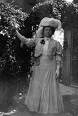
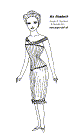
So, here’s our girl. She’s a vintage cut-out doll. Let’s put a new dress on her and let’s make it one that means. It’s our job to bring Edith to life. I’ve given her a name. Now let’s give her a life. And finally, let’s generate some physical details that express that life most accurately. Write an introduction to Edith that would fall early in a story, establishing who she is for our imagined readers.

Tuesday, June 13, 2006

Return To This Place


A blog-world reminder that our next Salon meeting is this Thursday (the 15th). All manner of exciting and informative and hilarious discussion will take place. Writers of all levels, backgrounds, and areas of expertise are welcome. And all signs point to an important Cincinnati literary event to remember.

Friday, May 26, 2006

Framed


Exercise Your InkTank
Framed

One of the oldest forms of the story is the frame story, which makes sense given the story’s roots in oral tradition. Often the frame of the story involves the act of telling of a story. The teller narrates a story to a fictional audience, whether actual or implied. Eventually, the larger frame seems to fall away and the true story becomes the story that is told within the frame story, the story within the story.

In the best frame stories, we are always aware of the frame, though we may not focus on it. In the worst frame stories, the frame is a clunky device that merely bookends a story.

The telling of the story (or the frame) need not have primary or equal interest but it should certainly have an impact on the shape and character of the story within. The frame can determine the bent with which the story within is told, it can provide an occasion for the story within, it can even give the audience a glimpse of the world beyond the story within.

In establishing a good frame, we have to think about how we want the story within to be told; we have to think about audience. For our craftshop exercise today, I’m going to provide you with some criteria which should help you to establish a sound frame.

Here goes: Your storyteller is a character in the story within the story. Though not the most important character, she does have a story to tell. As a teenager, she knew a man who was later to become a highly respected and well known public figure. At one time, though, he was an ordinary high school student. They weren’t friends. They shared an evening together, both of them stranded (awkwardly) at a party in the woods gone haywire. There were others there and he wouldn’t have noticed her there, but she saw him do something extraordinary. Something that would make the story worth telling now, especially in light of who he has become. And perhaps also in light of who it is that she has become.

Your task is to find a way to let this character tell her story. Give her an audience within the story. Give her a voice. Ease us into the story within a story.

Monday, May 15, 2006

Sweet Emotion


Exercise Your InkTank
Insides and Outsides: Telling A Good Joke

We’ve all heard the advice that showing is a better choice than telling, but if we always show what a character is feeling, our stories will likely collapse under the weight of a thousand meaningful hand and facial gestures. In other words, sometimes it’s necessary simply to say, he was mad, especially if showing him pocketing his hands or biting his lip until it bleeds disrupts the timing or rhythm or efficiency of the storytelling. Imagine a world in which characters can never say what they feel, but instead must find ways of otherwise revealing themselves. How cumbersome and how comical.

(A few provisos and sidebars: Of course, he was mad, can be written more interestingly. Word choice alone often seals the deal, brings the reader in like showing can. And of course some telling is always a terrible tire. Inflated dialogue tags, for example, or telling that is appended to showing, which is a sign that the writer does not trust the reader to make the proper assessment.)

How do we know when to say he was mad and when to send him stomping down some lonely corridor? Many writers will tell you that it’s a matter of instinct. We learn how to tell a good story when we’re children and we learn it by listening to the stories of others. We carry those same lessons with us as adult readers. We can remind ourselves of what good storytelling is by looking to what children want from a good story. According to Margaret Atwood, in “Reading Blind” children want these things: “They want their attention held … They want to feel they are in safe hands, that they can trust the teller … They will not put up with your lassitude or boredom: If you want their full attention, you must give them yours.”

Atwood also likens timing in stories to the logic of joke telling: “If we guess the riddle at once, or if we can’t guess it because the answer makes no sense – if we see the joke coming, or if the point is lost because the teller gets it muddled – there is failure. Stories can fail in the same way.”

Bringing it all together: If the writer’s desire to demonstrate/show what the character is feeling inside overwhelms the reader’s basic investment in the story by losing her attention, by betraying her trust, by seeming to lack urgency, or by muddling the story, the story will fail.

Let’s work on this by telling some really bad jokes and turning them into good ones. You’ve all probably got one joke, an old standby you’ve told a dozen times. First try inflating it to the extreme, omitting nothing and showing as much as possible. Next try paring it back. Keep some of your showing, but only enough to perfect the timing of the joke.

Monday, May 01, 2006

Time After Time


Exercise Your InkTank
Time Management

When we talk about back-story in storytelling, we’re often talking about the revelation of information and it’s sometimes a tricky chemistry. The introduction of other stories to the larger story can create an evocative sense of depth or even a sense of verisimilitude. And when you think about it, it’s hard to imagine a story that only moves directly forward in time. Even if a story does not invest a substantial formal movement to back-story, it may often recall moments (here and there) in a character’s life that work to explain things like motivation. When we understand why a character behaves the way he or she behaves, we’re more likely to believe and to invest; we’re more likely to allow ourselves to be moved. Back-story is a tool with great power, but if we’re not careful how we reveal information, we risk disrupting our readers. They can feel manipulated, or betrayed, or they might just sense the machinery behind the story and lose faith in it.

There is (of course) no one right way to reveal information, but there are some less than respectful ways that tend to irritate the hell out of readers. Token irritating revelation: “And then she realized she’d been dreaming.” Token infuriating revelation: “And then she realized she was dead.”

Here’s a smattering of good advice I’ve heard over the years: By revealing necessary information too late, we up-end the reader’s investment in the story. A good reveal is one that feels earned and organic, not theatrical. Real suspense is not created by withholding. Always connect. A good narrator is one who wants to tell you everything. A good hint is undetectable. It falls out like any other bit of information. The pleasure the reader derives from piecing things together will be greater if the piecing isn’t the focus of the narrative’s energy, but a consequence of it. The reader must always know where the story is. Always set the scene first – don’t ask your readers to re-imagine it later. Don’t make the story explain the difficulties away – break the bone to re-set it if you have to. If the story hinges on a central revelation, reveal without a hint of smarminess. Nobody really likes to know the writer is there behind the writing. There are unreliable narrators and there are unreliable narrators.

Many stories devote large formal movements to shifts in time. Here’s some advice I’ve heard about that: Set and maintain a pattern. Hang the back-story on a strong enough line. Reliance on juxtaposition alone for the activity of meaning-making between segments or sections creates exhaustion rather than interest. Again, always connect. Formal shifts can be denoted in many fashions ( * * * or white space or italics or chapter breaks, for example). Size is often an issue when deciding between them, but also taste.

Here’s my big craft-shop idea for the night. I’m going to give you some back-story on a character. You find a savvy way of revealing it in your own little story:

Once, when George was a child, he confused his father’s lessons. During a fire he was to evacuate with everyone else to the yard. During a storm he was to take cover beneath the large wooden table in the basement. But while everyone else stood in the yard and watched the house burn, he sat beneath the table and wondered at the smell. He was unharmed, but shamed greatly. His father trusted him to do nothing alone thereafter.

Tuesday, April 18, 2006

Retro


Exercise Your InkTank
Retrospective Narrative

The last time we met, the proposal was made that we work somehow with the idea of tense. This seemed fairly straightforward to me at first. Folks often argue, for example, that the use of present tense enhances the immediacy of the prose. But about an even number of folks also argue that using verb tense to invoke immediacy is overused and out of style. I guess what I’m getting at is that the matter of verb tense often comes down to a matter of taste.

We can see in our own telling of stories how tense shifts things tonally. When I want everybody on the edge of his or her seat as I’m telling my latest pool-hall fight story, I’ll shift into the present tense. As in, “There wasn’t a ball left on the table that was mine. And I’m telling her, ‘There’s no way I’m paying that cleaning bill.’ And she’s all, ‘You are too,’ and I’m all ‘I am not,’ and then we’re rolling around in the peanut shells on the bar floor.” Because I want you in the moment, I make that shift in tense, probably without even thinking about it.

A longer work rendered in present tense can present some interesting problems. One of them, fatigue. Most writers will tell you that they sometimes ease into the progressive verb forms, but that they don’t shoot for the present tense marathon. Again, it’s a matter of taste.

I thought we might also look at a kind of time in stories that is often overlooked: the distance between the narrative present of the story and the point in time at which the story is being narrated. The relative thickness of the retrospective narrative can have a distinct effect on the meaning that is made of the events of the story. If the narrator is a child during the narrative present of the events of the plot, your choice of distance from those events is a significant one. The further away you get, the more time the narrator has had to process what has happened. He or she may be an entirely different person now. There is no need in a narration like that for the character to speak like or as a child. It’s almost as if two consciousnesses occupy the same voice. A young one and an old one. Let’s see how this works.

Rewrite the following passage from the distance of your choice. Perhaps your narrator (she’s twelve years old, by the way) is telling this story the day after she experiences the events of the plot, maybe we’re right there in the moment with her, or maybe she’s twenty years older. Your choice of distance will effect the metaphors you use, as well as other choices you make in terms of language.

Fire required privacy, a place where no one could see you. It was no trouble finding such a place, the closet, and no trouble at all finding a candle and a book of matches. The trouble was that the fire moved so quickly beyond my control. It was my father’s Sunday coat that caught. I tried to stop it with my hands. There wasn’t any help and I was scared. I went into my head, stood there like my bones were fused together. The fire came from the inside of the walls and went down the outside of them. I watched it move, watched it lift things. From the open trunk of old clothes, bundles of scraps emerged in flame and fell. The bed went up in a big raft of light. The drapes seemed to collapse straight to ash. And then it stopped. As simply as it started, it stopped.

Friday, March 31, 2006

Perspectives on Perspective


For those of you who missed last night's session, or for those of you who wish to re-live it in the privacy of your own home, here's the exercise in perspective we craft-shopped. The idea is to re-write the (admittedly kind of silly) selection from a different narrative perspective. The only restriction is that you adhere to the scenario established. The effect of the shift in point-of-view is often more dramatic than you may expect and the material you generate may very well prove useful to you in your own work.

Third Person Limited, Close

Martin went into the bank with purpose. Get in and get out. That was his aim. He needed to make a deposit, check his account balance, and then maybe inquire after the young blonde who usually worked the drive-up window. He was curious to know where she'd been, that was all. It wasn't important. He'd simply grown used to her presence and wondered after her. It would be a casual thing, his asking. He picked an old woman teller because they were easier to approach about these things and just as he was pocketing his receipts and she was thanking him for his business, he asked. The woman frowned. "Do you really want to know?" she said. Martin was really very busy. He'’d only allotted a minute or two in his day for this portion of the transaction and yet he found himself leaning conspiratorially into the marbled ledge of the teller window. "Yes," he said. "Of course I do. What'’s happened?" There was a flutter in the woman's face that suggested tragedy to him. He saw the young woman's body flung up and over a speeding car, he saw her mugged in the bank'’s parking lot and thrown limp into a dumpster. She had a boyfriend, he knew it, a lout. She should have left him long ago, but she was in love and it had been then end of her. If he'd met her sooner, he felt, Martin could have helped her. With the power of his love, he could have redeemed her of anything. Even heroin, maybe. At least smoking. "You're sure you want to know?" said the old woman, her hand dandying a bank pen on a metal string. "Yes," said Martin. He steadied the swing of the pen to demonstrate his seriousness. "She's out to lunch, you pervert," said the woman.

Tuesday, March 28, 2006

So it's Tuesday and I totally blew the deadline I set for myself to post these by midnight Monday. I should have known better than to set myself up. But then the guilt got to me, so I guess it worked after all, just a day later than I said it would.

Here are the answers to the questionnaire. I thought they were more powerful lumped together and anonymous. Thanks to everyone who contributed your thoughts -- I'm looking forward to seeing you all again Thursday.

Best,
Stephanie

---

What is the gift you are offering this workshop today?

My vulnerability
My thanks, commitment, and fearlessness
Me. Um…I want to try to be engaging and compassionate, mostly.
The experience of a black male trying to make a difference by expressing his thoughts and teaching through example
Pizza and my presence
I am not sure yet
Time listening, helps
Networking from the ground up
Writing of poems, short stories, novels
My time, my thoughts, commiseration, encouragement

What do you hope to take away from this workshop today?

Energy and the impetus to write more
Always kernels of truth, whether universal, for the speaker, or for me
I want to walk out a better, more motivated writer.
I would like to take the experience of as many different people as I can
Inspiration for creating and a stronger connection to the community at the InkTank Writers Salon
Hope to find someone to answer my one-page questionnaire
Help in writing
Visions of others
Open ideas to cultivate a hidden writing skill
Whatever I can – new ideas, different viewpoints, specifics about how others write/view writing

Where do you get your writing ideas?

Walking, reading, listening: overhead snippets of conversation
Mostly from combining stimuli. My emotions, people I meet, things I see
Hate to say it, but my brain is videogame/fantasy/horror saturated to the point of busting.
Dreams, the people I meet at the coffee shop, characters in my family
Personal experiences and observations
Real life stories
Life, strangers, people, God, family
At this time spiritual?
Work, home, other novels, poems, people
Everywhere -- anywhere

What stops you from writing?

I wish I knew. The inner critic telling me that everything I write is terrible – or too mean
Self loathing
Videogames. On a deeper level, fear of failure.
Having too many ideas
Fear of criticism and self-doubt
Dinner on the table
Knowing I have a lot to write, or a sad experience to come.
Feel bad, and being on the run.
Time
Lack of discipline, internal editor (that negative voice sometimes cruelly intruding)

What stops you from sharing your writing?

Fear of hurting anyone, revealing too much, not being understood
Nothing. I ask everybody.
See above. (Fear of failure)
Finding the correct forum to share it
Thinking it isn’t good enough
Not good enough
Unknown at this time
Nothing. I want to share with everyone
“It’s not ready”

How do you stop procrastinating?

Plant myself in front of the computer, give myself space
The desire has to build up. If I don’t write, it’s because I must not have anything important to say.
By writing. It’s simple. There is no trick.
Like Nike, just do it
Action without analysis
Never do…
Do exercises in writing
Think I’m lazy
Just start doing what I am supposed to do. Sometimes by self motivating or setting goals
Sit down and write. Make the time. Remember how important writing is to me.

What do you hope to get from a critique?

Detailed, useful feedback, what works and what doesn’t
Reaction to the relatability of the material/characters. A reality check.
Insight in every aspect of my writing: story, character, diction, everything.
The viewpoint of others, I tend to be a bit biased about my own work
Constructive technical corrections, alternative approaches to a piece, and support for continuing to keep writing even if the presented piece is trash
Learn
Ideas
Depends?
A direction in which I am supposed to go and stick to it.
Constructive criticism. Gentle (I hope) honest assessment

What do you fear from a critique?

Vague feedback, disinterest more than rejection, stuff like, “you write like an angel”
People saying things just to sound intelligent. Posing.
I think I fear rejection, but I don’t really. Rejection would just make me defend my writing, grow closer to my work.
I fear that the critique would not truly express what the critiquer wants to say
Indifference
I don’t
Opening up. Being exposed
Depends?
That I might not like some of the things coming out. However I know it is for my own good.
I try to be open to what’s said – and not be afraid of opinions – it’s my choice to accept or decline what’s offered

Where are your favorite places to write and why?

My study – music loud as I want, big window; bars and coffeeshops – casual outside stimuli
Kaldi’s. Cafes. I like people, noise, energy, smells, fear, emotions – life. I block it out but soak it in and feel it.
In a coffee shop, away from TVs, computers
Coffee Emporium, Cooper’s on Main, crowded places. I love people watching
My apartment – I’ve got everything set up just the way I like it/anywhere with a structured group – it’s energizing to all be writing together
In front of my computer; tools help…
Around water, bedroom, being by myself helps me to write and for my thoughts to flow
Quiet places mind wanders
My room, work, parks, beaches. I can see clearer and my mind is free. My stories come from these places.
Home at my desk/wherever I am when ideas/words/thoughts come to me

What would you like in a communal writing environment? (For instance: music or silence?)

Music – but what kind?
Music
Silence. Availability
I would like an atmosphere that is not inhibited with embarrassment and that thrives off the vitality of each member. Whether that calls for silence or music, either is fine.
Depends on my mood or what’s being written about. I’d like to try various ways: Heavy Metal music and flashing lights. Quiet or soft music with candlelight with incense, and any others.
Sometimes I will do either or.
Silence, but I can adjust
Music, if it is mind flowing. Otherwise silence for it helps me to think clearer.
Silence

Other comments:

Like churches have prayer requests, maybe we could have a writing/reading request of some sort.
No intros except for new people. It’s up to us to welcome them in.
I want to motivate. I want to be motivated.
Started writing Nov. 2005
I am intrigued by the talent that is here at InkTank and I am enjoying the flow of energy that is here.
I’m grateful for the opportunity to be in community with other writers.

Tuesday, March 14, 2006

Workshop Nuts & Bolts:


It seems very likely to me that we’ll come upon our own ideas of how we’d like our workshops to proceed, but for now let’s stick to something tried and true. I’m working now from the model most sound in my experience:

We will begin each workshop by listening to the writer, who will read from his or her own work. It’s helpful to hear the text vocalized according to the writer’s intent – it gives us a sense of voice we may not otherwise have had. The writer may choose to read the entire work (if it’s pretty short) or a few pages (if it’s pretty long). And that’s the last we’ll hear of the writer during the critique of the story. It is absolutely imperative that the writer listen to the conversation from that point on without participating. This will ensure that the members of the group feel safe entering the discussion. They simply won’t if they must worry about addressing the writer – the focus should always be the story. This may be difficult for some writers. The difficulty soon subsides. Trust me.

Next, a volunteer (perhaps someone whose work will also be up that evening) will begin the critique. It’s not a bad idea to start with a positive. Then, we’ll all join in. Try to explain yourself in a way that might allow the writer to understand your experience of reading the story and understand you as an earnest person. Details will assist you in achieving this goal. Mark freely but conscientiously on manuscripts. It is frequently the case that in seeing our stories we lose sight of them. That’s why comments and notes on manuscripts are so important. But let’s please not be petty. A word of advice: read the story through at least once before commenting upon it. Remember to sign or initial your copy of the story before returning it.

Finally, at the end of the workshop, the writer will have the opportunity to ask questions. (This time should not be mistaken as an opportunity to defend or explain the story.)